- Coffee grind size refers to how fine or coarse the coffee beans are broken down before brewing, and it plays a central role in how a cup tastes. Grinding coffee beans increases the surface area exposed to water, which changes how quickly flavour compounds are pulled from the grounds. Fine grounds have more surface area, so they extract faster and are suited to brewing methods with short contact time. Coarse grounds have less surface area, so they extract more slowly and work well with longer brewing times.
- Grind size also affects how water moves through the coffee bed. Fine grounds pack more tightly and slow the flow of water, which builds the resistance that pressure-based machines rely on. Coarse grounds sit more loosely and allow water to pass through quickly, which suits gravity or immersion brewing. This is why different coffee machines and brewing methods each call for their own grind level.
- The relationship can be summed up simply: grind size affects water contact, water contact affects extraction, and extraction determines coffee flavour. When the grind doesn’t match the brewing method, the result can be coffee that tastes weak, sour, bitter, or overly intense, even when the beans are high quality. Getting the coffee extraction right starts with choosing a grind size suited to the brewing method being used
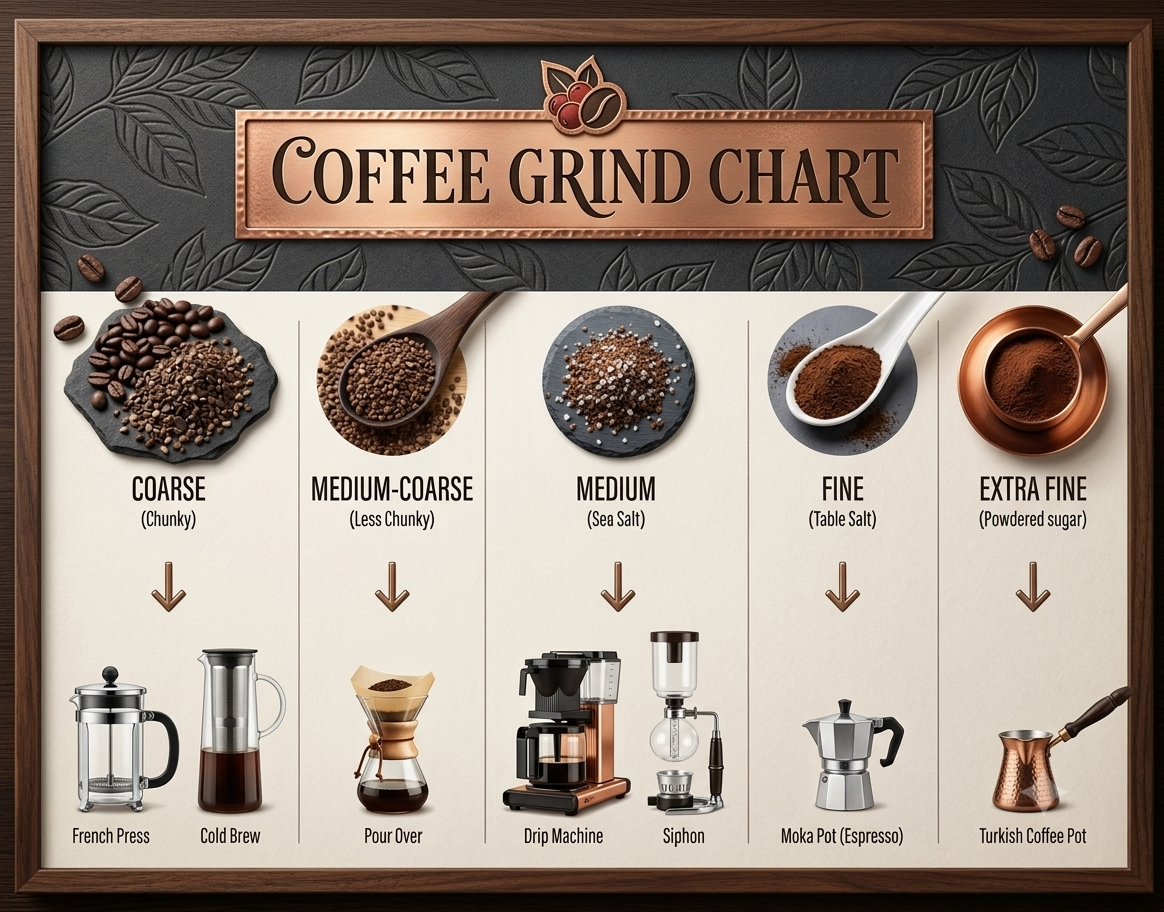
Coffee Grind Sizes Explained: From Extra Coarse to Extra Fine
Coffee grind sizes exist on a spectrum, ranging from large, chunky particles similar to sea salt to extremely fine, powder-like grounds. Between these two extremes sit several coffee grind levels, each suited to a particular brewing method and machine type. The exact grind setting or number can vary between coffee grinders, so it helps to judge grind by texture and by how it performs during brewing rather than by a fixed number alone. The sections below walk through each of these types of coffee grinds, from extra coarse to extra fine.
- Extra Coarse Grind
Extra coarse coffee grind consists of large, chunky particles that resemble coarse sea salt or peppercorns, with visibly uneven edges. Because the particles are so large, water takes a long time to extract flavour from them, which makes this the correct cold brew grind size for methods where the grounds steep for an extended period. Cold brew coffee relies on this slow, gentle extraction to develop a smooth, low-acid flavour without turning bitter. Using this coarse coffee grounds texture for cold brew supports the kind of consistent, well-rounded cup that keeps coffee drinkers coming back.
- Coarse Grind
Coarse coffee grind is made up of large, clearly visible particles that still hold together loosely rather than forming a fine powder. This texture is the standard choice for immersion brewing, particularly French Press coffee, where the grounds sit directly in water before being pressed and separated. A French Press grind size that is too fine can slip through the mesh filter and create unwanted sediment in the cup. Choosing the right coarse ground coffee for this method supports a cleaner, more enjoyable drinking experience and reflects well on the overall brewing process.
- Medium-Coarse Grind
Medium coarse coffee grind sits between coarse and medium, with particles slightly smaller than French Press grounds but still noticeably textured. This pour over grind size suits selected pour-over methods, particularly brewing systems where water flows more slowly through the coffee bed. Because brew time can vary between devices, it helps to adjust the coffee grind texture based on how quickly or slowly the water passes through. Matching this grind to the right coffee brewing methods supports steady, dependable results cup after cup.
- Medium Grind
Medium coffee grind is a versatile, balanced starting point that resembles regular sand in texture. It is the standard choice for drip coffee grind and filter coffee, and it suits a wide range of coffee machines and brewing systems built around steady water flow. Medium ground coffee strikes a balance between water flow and extraction, allowing water to pass through evenly without moving too fast or too slow. This balance makes medium grind a dependable everyday choice that supports consistent quality across many brewing setups.
- Medium-Fine Grind
Medium fine coffee grind has a slightly smoother texture than medium grind, similar to fine sand. It works well for pour-over coffee and suits some coffee machines, depending on their particular brewing system, including this V60 grind size where a controlled, steady pour is used. This grind size gives water enough resistance to extract fully within a shorter brew time. Getting these coffee grind settings right helps pour-over methods deliver the clarity and balance they are known for.
- Fine Grind
Fine coffee grind has a texture similar to table salt and plays a central role in pressure-based brewing. It is the standard grind for espresso machines and the correct Moka Pot grind size, both of which rely on shorter brewing times and higher pressure to extract flavour quickly. The espresso grind size must provide enough resistance to build proper pressure without blocking water flow entirely. A well-tuned fine ground coffee texture is essential for the concentrated, balanced shots that pressure brewing is meant to produce.
- Extra Fine Grind
Extra fine coffee grind has a powder-like texture, finer than table salt and closer to flour. It is required for Turkish coffee, where a Turkish coffee grind this fine is boiled directly with water rather than filtered. Achieving this level of extra fine coffee grounds calls for specialised grinding equipment, since not every standard coffee grinder can reach this consistency. Supporting this level of precision reflects the kind of attention to detail that builds lasting trust in a coffee brand.
Coffee Grind Size Chart: Which Grind Is Best for Each Brewing Method?
A coffee grind size chart offers a general starting point for matching grind level to brewing method, though the exact setting can vary depending on the coffee grinder, machine, and recipe used. The table below summarises the recommended grind size for common coffee brewing methods and machines.
| Grind Size | Texture Comparison | Best Brewing Method |
|---|---|---|
| Extra Coarse Grind | Coarse sea salt or peppercorns | Cold Brew |
| Coarse Grind | Large, loosely held particles | French Press |
| Medium Coarse Grind | Between coarse and medium | Slow pour over devices (e.g. Chemex) |
| Medium Grind | Regular sand | Drip Coffee Maker, Filter Coffee |
| Medium Fine Grind | Fine sand | Pour Over (e.g. V60) |
| Fine Grind | Table salt | Espresso, Moka Pot |
| Extra Fine Grind | Powder, close to flour | Turkish Coffee |
This coffee grind chart is meant as a set of recommendations rather than fixed rules. The ideal grind can shift depending on the coffee beans themselves, the roast level, the specific grinder in use, and the brewing recipe being followed. Treating the best coffee grind size as a flexible starting point, rather than a strict formula, allows for the kind of fine-tuning that consistently improves the final cup.
How to Choose the Right Grind for Your Coffee Machine
Coffee machine grind size depends more on how a machine brews than on any single universal setting. Considering the brewing mechanism of the coffee machine grinder itself, rather than applying one grind across every device, is the surest way to get consistent results.
- For Your Espresso Coffee Machines
Espresso machine grind size calls for a fine, consistent grind, since the machine forces water through the coffee bed under pressure in a short amount of time. Consistent particle size matters here, as uneven grounds can cause water to find the path of least resistance and extract unevenly. Even small adjustments to the grind can noticeably change how a shot pulls, from a quick, sour extraction to a slow, bitter one. The Coffee Co’s range of espresso and home espresso machines is built around this kind of pressurised brewing, where a properly tuned fine grind makes the difference between an average shot and a well-balanced one.
- For Your Automatic or Bean-to-Cup Coffee Machines
Automatic coffee machine performance depends heavily on fresh, consistent grinding, since these machines are designed to handle the brewing process with minimal manual input. Because the built-in grinder or machine setting does most of the work, users can fine-tune results by adjusting the grind based on flavour and how the coffee flows during brewing. A shot that comes out too fast or tastes thin often points to a grind that needs to be finer, while a slow, bitter pour suggests the opposite. The automatic coffee machines and bean-to-cup machines available through The Coffee Co are designed to make this kind of adjustment straightforward for everyday use.
- For Your Manual and Semi-Automatic Coffee Machines
Manual and semi-automatic machines place more control directly in the hands of the user, which makes grind consistency even more important. These machines respond quickly to grind changes, so a slightly coarser or finer setting can shift the brewing time and flavour noticeably. Paying attention to how quickly a shot pulls helps identify when the grind needs adjusting. The manual coffee machines in The Coffee Co’s range reward this kind of careful, hands-on grind management with a more refined cup.
- For Your Professional and Cafe Coffee Machines
Professional and cafe-grade machines are built for high, consistent output, which makes a dependable grind setting essential for keeping every cup uniform throughout the day. These machines are typically paired with a dedicated grinder set to a fine, repeatable coffee grind size suited to steady espresso-based service. Drifting extraction times across multiple cups is usually a sign that the grind or grinder needs recalibrating. The professional coffee machines and cafe coffee machines from The Coffee Co are designed to support this level of consistency at volume.
How Does Grind Size Affect Coffee Machine Performance?
- Coffee machine performance depends on more than taste alone, since the wrong grind can also affect how smoothly a machine actually brews. Fine grounds can slow or restrict water flow, which places extra strain on machines that rely on pressure to push water through the coffee bed. Coarse grounds, on the other hand, can allow water to pass through too quickly, leading to a fast, under-extracted brew regardless of how well the machine itself is built.
- Uneven grounds create a further problem, since a mix of particle sizes in the same dose leads to inconsistent extraction, with some particles over-extracting and others under-extracting at the same time. This is especially noticeable in machines that rely on built-up pressure, where consistent resistance across the coffee bed is essential for a balanced shot. An automatic machine fed with unevenly ground coffee, for example, may produce a shot that tastes bitter on one brew and thin on the next, even with identical settings.
- Machine-specific coffee grinder settings matter because every brewing system applies water differently, whether through gravity, immersion, or pressure. Matching the grind to the specific machine, rather than relying on a single setting across different devices, supports smoother operation and a more reliable cup of coffee extraction after extraction.
What Happens When Your Coffee Grind Is Too Fine or Too Coarse?
- When the Coffee Grind Is Too Coarse
A coffee grind too coarse for the brewing method allows water to flow through the grounds quickly, leaving too little contact time for proper extraction. The result is often weak or watery coffee, along with sour or underdeveloped flavours that suggest under extracted coffee. When a brew tastes thin or sharp rather than balanced, grinding finer is usually the first adjustment worth trying.
- When the Coffee Grind Is Too Fine
A coffee grind too fine for the brewing method slows water flow considerably, which extends brewing time well beyond what the method calls for. This extra contact time often leads to bitter or harsh coffee, a clear sign of over extracted coffee. When brewing feels slow and the cup tastes overly intense or harsh, moving to a coarser setting typically brings the flavour back into balance.
| Problem | Possible Cause | What to Try |
|---|---|---|
| Coffee tastes sour | Grind is too coarse | Grind finer |
| Coffee tastes weak | Grind is too coarse | Grind finer |
| Coffee tastes bitter | Grind is too fine | Grind coarser |
| Brewing takes too long | Grind is too fine | Grind coarser |
| Water flows too quickly | Grind is too coarse | Grind finer |
Choosing the Right Coffee Grinder
The type of coffee grinder used has a direct effect on the consistency of the grounds and, in turn, on the final cup of coffee.
Burr Grinder vs Blade Grinder
The choice between a burr vs blade grinder shapes how even the final grounds turn out, and both approaches produce noticeably different results.
- A blade grinder chops coffee beans using a spinning blade, which tends to create a mix of large and small particles within the same batch.
- This uneven particle size can lead to inconsistent extraction, since finer bits over-extract while larger chunks under-extract in the same brew.
- A burr grinder crushes beans between two consistent surfaces, producing far more uniform coffee grind sizes across the whole batch.
- This consistent grind size supports more even coffee extraction and a more predictable cup from one brew to the next.
Both approaches can produce a drinkable cup, and the right choice ultimately comes down to how much consistency and control a brewing method demands.
Choosing a Grinder for Your Brewing Needs
A coffee grinder should be able to comfortably produce the specific range required for the intended brewing method. Espresso requires precise fine-grind adjustment with very little room for error, while Moka Pot brewing needs a fine grind that stops short of a powder-like texture. Filter coffee generally performs well with medium settings, and French Press calls for a distinctly coarser grind. Choosing a grinder capable of covering this full range supports consistent coffee grind results across every brewing method used at home or in a cafe.
How to Adjust Your Coffee Grind for Better Results
Learning how to adjust coffee grind size is easier when approached as a gradual process rather than a single decision, and a few simple coffee brewing tips can make the process far less confusing. Starting with the recommended grind range for the chosen brewing method gives a solid foundation to build from. From there, making small adjustments, one step at a time, makes it far easier to see what effect each change has on the final cup.
Changing one variable at a time is important, since adjusting the grind, the coffee dose, and the water temperature all at once makes it difficult to know which change actually improved or worsened the result. Monitoring brewing time and water flow alongside taste gives a clearer picture of whether the grind needs to move finer or coarser. Taste remains the final guide, and small, deliberate adjustments to coffee grinder settings tend to produce steadier improvements than large, sudden changes.
Adjusting Coffee Grind for Espresso Machines
Espresso grind adjustment calls for particularly small and gradual changes, since espresso machines are highly sensitive to even minor shifts in grind size. A slight adjustment that would barely register in a drip machine can turn a balanced shot sour or bitter in seconds on an espresso machine. Making one small adjustment at a time, then tasting and timing the next shot, is the most reliable way to dial in an espresso grind.
Common Coffee Grinding Mistakes to Avoid
Knowing how to grind coffee correctly involves avoiding a handful of common coffee grinding mistakes that can quietly undermine an otherwise good cup, and these coffee grinder tips cover the most frequent ones.
- Using the same grind for every brewing method, rather than adjusting for how each one extracts.
- Grinding too fine for a particular brewer, which slows water flow and leads to over-extraction.
- Making large grinder adjustments instead of small, gradual changes between brews.
- Ignoring changes in brew time, which are often the first sign that the grind needs adjusting.
- Grinding coffee too far in advance, which allows the grounds to lose freshness before brewing.
- Using inconsistent grounds from a lower-quality grinder, which leads to uneven extraction.
- Changing multiple brewing variables at the same time, which makes it difficult to identify what actually caused a change in flavour.
Avoiding these coffee grind size mistakes makes it far easier to troubleshoot and refine a brew with confidence
Conclusion
There is no single perfect coffee grind size that works for every situation, since the right grind depends on the brewing method, the coffee machine, the grinder, and personal taste preferences. The coffee grind size guide and chart above offer a dependable starting point, and small adjustments based on brewing time, water flow, and flavour help refine that starting point into a consistently good cup.
Matching the right coffee grind to the right brewing method or coffee machine remains one of the simplest, most effective ways to improve coffee quality and consistency. With a clear coffee grinding guide in hand, better coffee brewing becomes a matter of small, informed adjustments rather than guesswork.
FAQs
1. What is the best coffee grind size for different brewing methods?
The best grind size depends on the method: coarser grinds suit cold brew and French Press, medium suits drip and filter coffee, and fine suits espresso and Moka Pot.
2. How do I know if my coffee grind is too coarse or too fine?
Weak, sour, or fast-brewing coffee usually points to a grind that is too coarse, while bitter, slow-brewing coffee points to a grind that is too fine.
3. What happens if coffee beans are ground too fine?
Water flows too slowly through overly fine grounds, which often leads to over-extraction and a bitter, harsh cup.
4. What happens if coffee beans are ground too coarse?
Water flows through too quickly, leading to under-extraction and coffee that tastes weak or sour.
5. What grind size should I use for an automatic coffee machine?
A medium to fine grind generally works well for automatic coffee machines, though the exact setting can vary by model.
6. What grind size should I use for a manual espresso machine?
Manual espresso machines require a fine grind that provides enough resistance for controlled, pressurised extraction.
7. What is the best grind size for a Moka Pot?
A fine grind works best for a Moka Pot, offering enough resistance without blocking water flow.
8. Can I use the same coffee grind size for every coffee machine?
Using the same grind across every machine is not recommended, since each brewing method relies on a different grind for balanced extraction.
9. How should I adjust my coffee grind size for better-tasting coffee?
Make small, gradual adjustments, change one variable at a time, and use brewing time and taste as a guide.
10. Why do coffee grinder settings differ between grinders?
Grinder settings and numbering vary by design and manufacturer, so it is best to judge grind by texture and performance rather than a fixed number.
11. Is a burr grinder better than a blade grinder for different coffee grind sizes?
A burr grinder generally produces a more consistent grind across sizes, which supports more even extraction than a blade grinder.
12. Should I buy whole coffee beans and grind them before brewing?
Grinding whole beans shortly before brewing helps preserve freshness and gives more control over the final coffee grind size.