Difference Between Home and Commercial Coffee Machines
Difference Between Home and Commercial Coffee Machines
- coffee machines
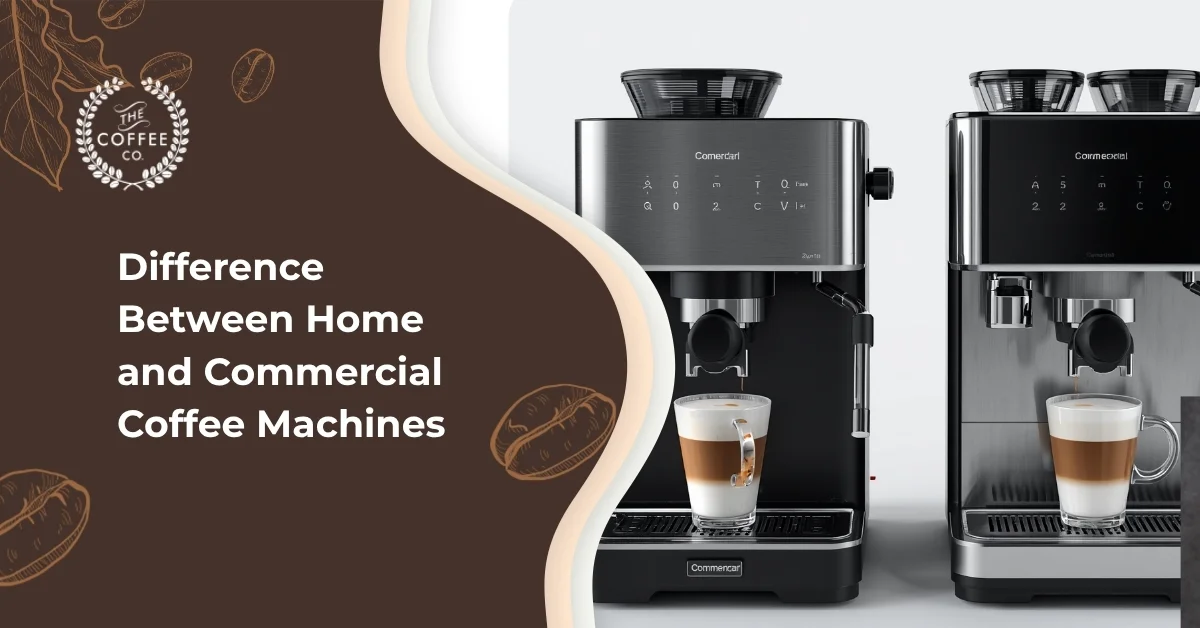
Choosing between a home and a commercial espresso machine comes down to more than budget. Capacity, build quality, brewing pressure, and maintenance requirements all differ significantly across home, professional espresso machines, and commercial categories. Whether the need is a super automatic espresso machine for a busy office, a semi-automatic espresso machine for a skilled home brewer, or a fully automatic espresso coffee machine for a café environment, The Coffee Co. offers options across the full spectrum. This guide covers the key differences to help homes, offices, and cafés make a well-informed decision.
Key Differences in Capacity and Durability
Commercial espresso machines are built for continuous, high-volume use across full working days, while home machines are engineered for occasional brewing in a domestic setting. The materials, motor strength, and internal components reflect this difference at every level of the build.
- Home machines prioritize compact size and ease of use over raw output capacity
- A coffee machine for shop or café environments requires robust construction that withstands hundreds of cycles daily
- Espresso machine commercial builds use stainless steel frames, commercial-grade boilers, and reinforced group heads that home models do not carry
- Home machines serve their purpose reliably within their intended volume range, but placing them in high-demand environments accelerates wear significantly
Brewing Pressure and Performance
Pressure directly shapes extraction quality, crema density, and the consistency of every shot produced. Commercial machines maintain higher and more stable pressure across consecutive shots, which is where they most visibly outperform domestic alternatives.
Super Automatic Espresso Machine vs Semi Automatic Espresso Machine
- A super automatic espresso machine handles grinding, dosing, tamping, and brewing in a single automated sequence. This makes it the most accessible option for office environments and high-traffic settings where staff skill levels vary. Consistency is built into the machine rather than being dependent on the operator.
- A semi-automatic espresso machine automates the water delivery but leaves grinding, dosing, and tamping to the user. This format suits experienced brewers who want precise control over each variable in the extraction process. The trade-off is a higher skill requirement in exchange for greater flexibility and a more hands-on brewing experience.
Both formats deliver strong results within their intended environments. The right choice depends on who will be operating the machine and how consistently they need to perform.
Features and Customization Options
A bean-to-cup coffee machine combines grinding and brewing in one unit, making it a versatile option for offices and cafés that want fresh-ground quality without separate equipment.
- Home machines focus on simplicity, offering a streamlined feature set suited to personal preferences and occasional use
- A coffee machine espresso maker designed for commercial environments includes group head controls, temperature profiling, and output tracking that support high-volume consistency
- Advanced customization in commercial models allows staff to maintain drink consistency regardless of who is operating the machine at any given time
Commercial machines extend this with multiple boilers, programmable dose settings, and simultaneous brewing and steaming capability that home machines do not offer.
Maintenance and Servicing Requirements
Commercial coffee equipment requires regular professional servicing to maintain performance and prevent breakdown during peak operating hours. Home machines require simpler care, typically limited to daily cleaning and periodic descaling.
- An espresso machine for commercial use includes more replaceable components, including group head gaskets, steam valves, and solenoids, that wear faster under high-volume conditions
- Coffee machine servicing for commercial units is best scheduled on a regular professional basis rather than handled entirely in-house
- Home machines managed with consistent daily cleaning and monthly descaling maintain performance reliably without requiring specialist intervention
Choosing the Right Machine for Your Needs
Matching the machine to the environment is the most important decision in this category. A coffee maker machine for shop use placed in a domestic kitchen is over-engineered for its setting, just as a home machine placed in a café will struggle under the daily demand placed on it.
- Home use with occasional brewing suits a compact automatic espresso coffee machine with straightforward controls
- Office environments with moderate daily volume suit a super automatic espresso machine or a bean-to-cup coffee machine that requires minimal operator skill
- High-volume café settings require a professional machine built for sustained output, consistent pressure, and easy access for daily maintenance
Cost Considerations
- A professional espresso machine represents a category investment rather than a simple appliance purchase. The higher upfront cost reflects durability, output capacity, and the operational reliability that commercial environments depend on.
- Home machines sit at a more accessible price point and deliver strong value within their intended domestic use case
- The best commercial espresso machine for a café or busy office pays for itself over time through consistent output, reduced downtime, and lower per-cup cost at scale
- Operational costs, including water, energy, cleaning products, and servicing, differ meaningfully between home and commercial formats and factor into the true total cost of ownership
Final Thoughts
Understanding the difference between home and commercial coffee machines removes the guesswork from what is often a significant purchasing decision. Commercial machines deliver the durability, pressure consistency, and output capacity that professional environments demand, while home machines prioritize convenience and compact design for personal daily use.
The Coffee Co. supports both categories with equipment selected for performance, longevity, and the practical needs of each setting. Choosing the right machine, maintaining it properly, and matching it to actual usage patterns ensures the best possible return on the investment.
FAQs
What is the difference between a home and a commercial coffee machine?
Home machines suit occasional domestic use with compact, simplified designs, while commercial machines handle high-volume continuous use with robust construction and advanced controls.
Which coffee machine is best for office use?
A super automatic espresso machine or a bean-to-cup coffee machine suits most office environments, offering consistent quality with minimal operator skill required.
How does a semi-automatic espresso machine differ from a super-automatic espresso machine?
A semi-automatic requires manual grinding and tamping, while a super-automatic handles the full process automatically from bean to cup.
Which coffee machine is ideal for a small office setup?
A single-group espresso machine or a compact bean-to-cup model provides professional-quality output at a scale suited to smaller teams.
Are bean-to-cup coffee machines suitable for commercial use?
Commercial-grade bean-to-cup machines handle high daily volumes reliably, making them well-suited to busy offices and smaller café environments.
How often should a commercial espresso machine be serviced?
Regular professional servicing on a scheduled basis keeps commercial coffee equipment performing consistently and prevents costly breakdowns during peak hours.
What is the best commercial espresso machine for cafés?
The best commercial espresso machine for a café balances output capacity, pressure stability, ease of maintenance, and durability under continuous daily use.
Can home machines produce professional-quality espresso?
Quality home machines produce excellent espresso within their design parameters, though they lack the pressure stability and output consistency of professional equipment.
What maintenance is required for professional espresso machines?
Daily cleaning, regular group head maintenance, and scheduled professional coffee machine servicing keep professional machines performing at full capacity.
How do coffee machine features differ between home and commercial models?
Commercial models include multiple boilers, programmable group settings, and simultaneous brewing and steaming capability that home machines do not typically offer.
Related Post

- Design trends
Top 7 popular coffee trends in 2026 reflect how coffee has moved beyond a daily habit into a complete lifestyle

- coffee machines
Coffee brewing temperature is one of the most direct and controllable factors shaping how every cup tastes, smells, and feels.
- Automatic coffee machine
Understanding the right automatic coffee machine features makes the selection process considerably more straightforward than comparing spec sheets alone. Practical